

Once in a Dream – Creativity Challenge
“You don’t have to be good at art for it to be good for you.”
Creativity has been scientifically proven to help people feel better, think more clearly, process emotions, reduce stress and depression, connect with others, and build resilience.
The overall theme for this challenge is “Once in a Dream.” Each week we will explore a different topic relevant to this theme. I think I could continue with this theme forever because I enjoy it so much!
But let’s focus on creativity and dreams for 6 weeks.
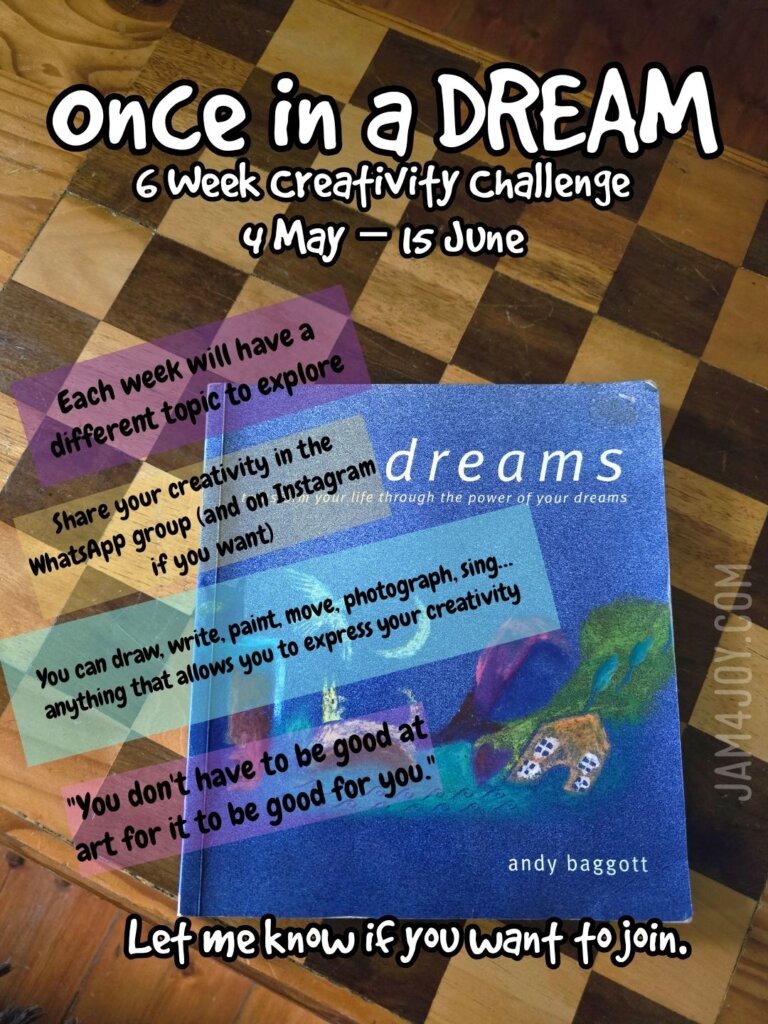
Interpret the topic in your own way, there’s no right or wrong. You have until Sunday if you want to share something creative for that week.
Remember, you can use AI as a tool, but not to replace your own creative thought.
The idea is just to pause, think a little differently, and make a bit of time for creative reflection.
I’ll also share a short blog post each week if you’d like to go a bit deeper into the topic for the week, including thoughts on dreams, creativity, and how our minds work.
At the end of the week, I’ll share some of our creative work from the Whatsapp group on the same blog post, as a way to reflect on the week.
This is not about being “good” at art. So many people tell me they are not creative when they actually are… just not in the “conventional artistic way.”
This challenge is about noticing, expressing, and reconnecting with yourself, others and the world of dreams.
I see dreams as a way your brain sorts, integrates, and reshapes your experiences. But also as something deeper. I believe there is wisdom to be found in making time to listen to your dreams.
Some native South American tribes, like the Lakota and Ojibwe, viewed dreams as a way of accessing a more real spiritual world. Dreams could guide decisions, reveal truth, or connect you to ancestors and spirit beings. The waking world was sometimes seen as less trustworthy than what is revealed in dreams.
In some Hindu traditions, waking life is described as maya (illusion), similar to a dream. The idea is that both dreaming and waking are states of consciousness, and neither is the ultimate reality.
There’s real western science behind “sleep on it” we do actually problem solve while we sleep. Dreams are essential for emotional balance, learning, and mental health.
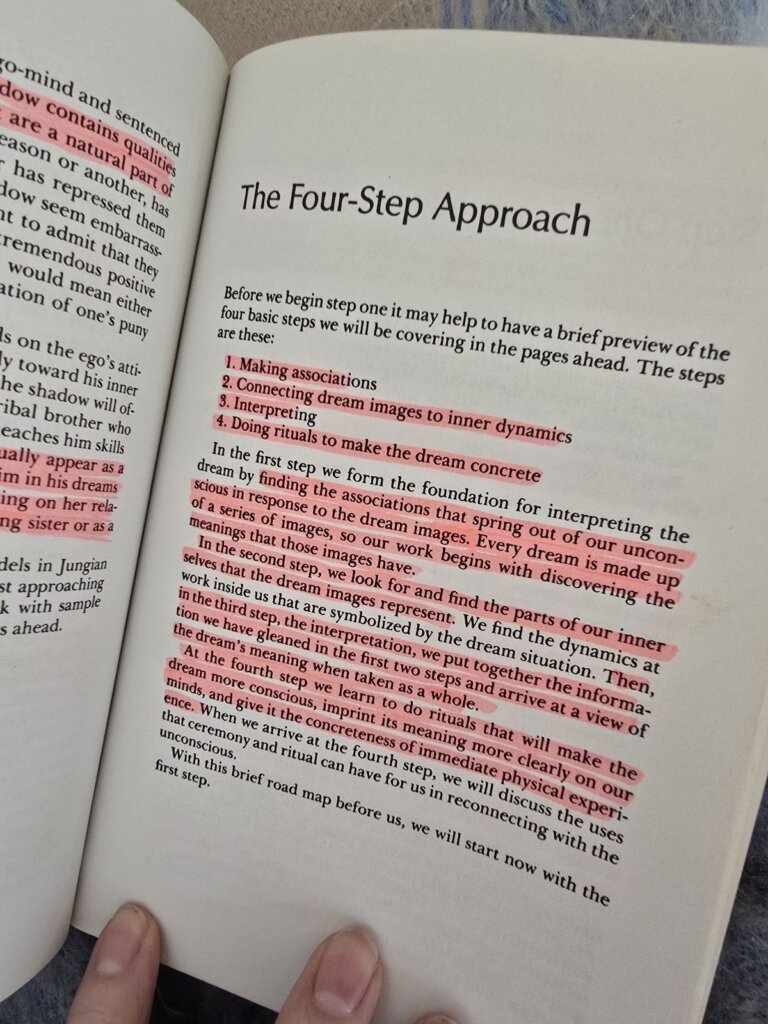
Carl Jung, renowned psychiatrist and psychotherapist, believed that dreams are not random. He saw them as messages from the unconscious, helping us understand ourselves more deeply and help us move towards wholeness.
Many people throughout history have found deeper meaning in dreams. Today science is starting to explain how dreams work and that they are important, and Carl Jung reminds us to ask what they might be trying to show us.
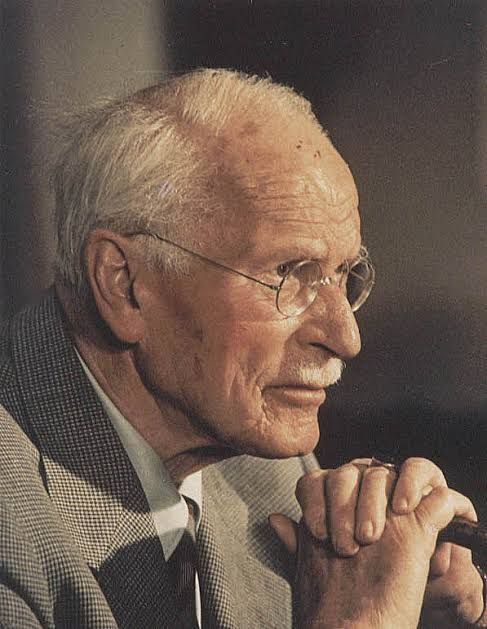
“Who looks outside, dreams; who looks inside, awakes.” Carl Jung